 Wren Sent
The best way to deliver an email tarot reading.

The best email reading is one where your client can feel that you slowed down for them. The format you use is part of what makes that possible. A wall of text in an Etsy message reads as fast. A considered page reads as care. The work that goes into the reading is the same. The way it lands is what changes.
Below is a workflow that holds up across volume, looks like your practice, and gives your client something they can return to.
In this post
- What an email tarot reading actually needs to include
- The two delivery formats that work, and the one that does not
- A step-by-step workflow from intake to send
- How long an email reading should be
- What to do when a client comes back with follow-up questions
- The short version
What an email tarot reading actually needs to include
Strip the format question away and you are left with the content. A complete email reading has five things in it.
- A clear opening. Restate the question in your own words, showing the client you read what they sent and grounding the reading in their actual context.
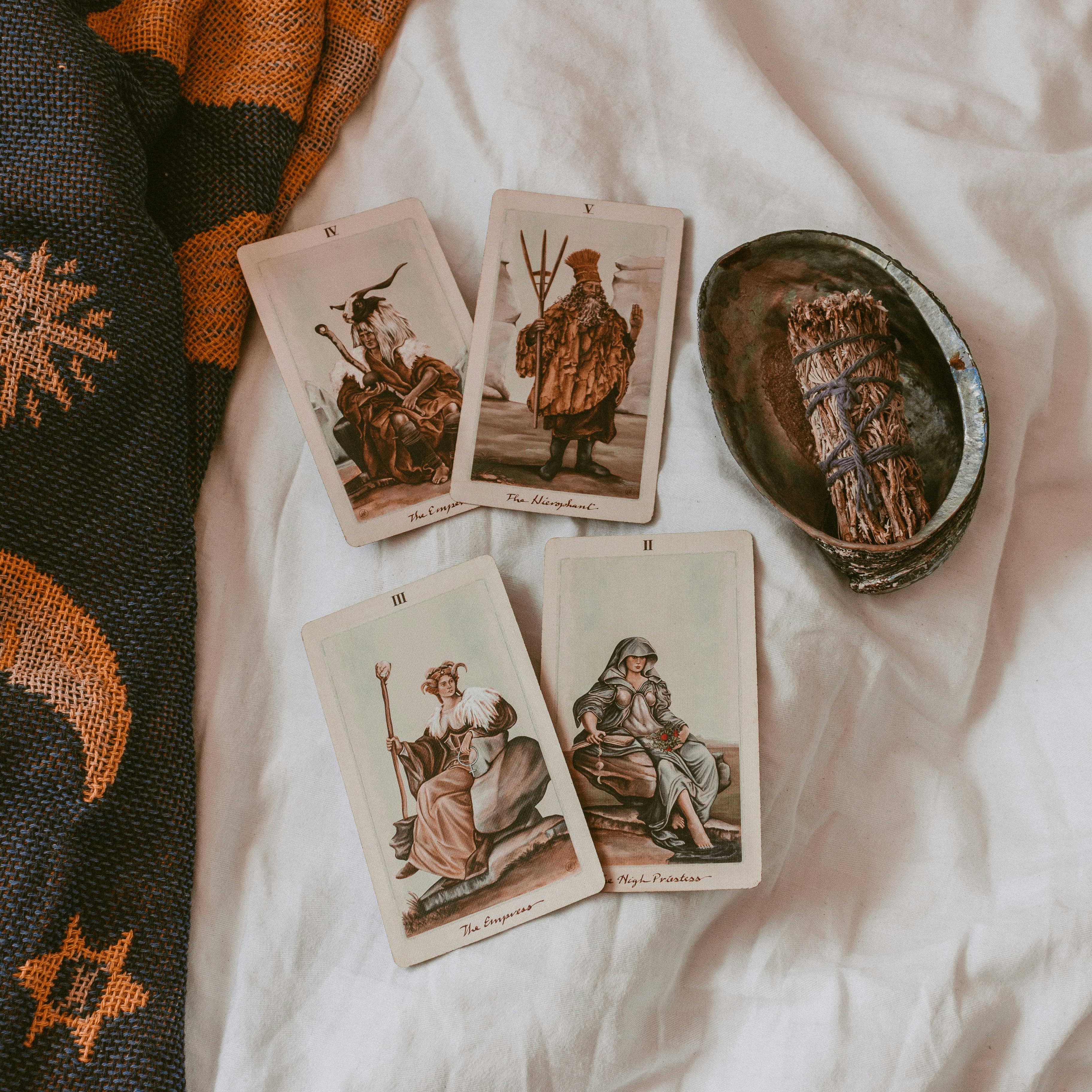
- A photo of the spread. Real cards on a real surface, taken in good light. It is proof of presence: this was done by hand, for them.
- The card-by-card reading. Name each card, its position in the spread, and what you saw. Use plain language.
- The synthesis. What the cards say together. This is the part clients value most.
- A close. A line or two that lands the reading and gives the client somewhere to go from here.
The two delivery formats that work, and the one that does not
There is a hierarchy of delivery formats for email readings, and where you sit on it shapes how the work is received.
- A dedicated reading page. One link with your name, the card photo, reading text, personal note, and any video or audio together. The client can return whenever they want.
- A formatted PDF, sent as an attachment. A real second-best: more polished than plain text and savable, but slower to make and poor at holding media.
- A wall of text in a DM or Etsy message. The default that costs the most. Meaningful words feel disposable in a chat thread, and the client cannot easily come back to them.
The reading was probably good. The delivery made it feel like it was not.
A step-by-step workflow from intake to send
A workflow protects you on the busy weeks. Build it once, then run it the same way every time.
Intake. Use a form, not a DM: name, question or focus area, context, and the expected delivery date.
Set the spread. Pull the cards and take the photo before you start writing.
Write in one sitting if you can. Your synthesis depends on holding the whole picture at once.
Edit lightly. Fix typos, tighten the synthesis, and resist over-polishing.
Build the delivery. Bring the text, card photo, and short personal note together before sending.
Send the link. A short message in the channel where they booked is enough.
How long an email reading should be
Long enough to be complete. Short enough to be read.
For a three-card reading, 600 to 1,000 words is typical. For a Celtic Cross or larger spread, 1,200 to 2,000 words. Beyond 2,000 words, you are usually padding. Clients who paid for depth will read 1,500 considered words. They will skim 3,000 unconsidered ones.
The synthesis should be roughly a third of the total length. If your card-by-card section is 1,000 words and your synthesis is 200, the reading will land thin no matter how good the individual interpretations are.
What to do when a client comes back with follow-up questions
Decide your policy before you need it. Most readers settle on one of three.
- Included follow-up window. Offer 48 or 72 hours for clarifying questions, included in the price.
- Paid follow-up. Make a smaller offering for follow-up questions when you need to protect time at higher volume.
- No follow-up. The reading is complete on delivery; new questions become new bookings.
Whichever you pick, name it on your booking page. Surprises here are where client friction starts.
This is what Wren Sent does.
A page made for the reading. Your name at the top. Card photo, written reading, personal note, all in one place. One link. Start free, no card required.
The short version
The reading is the work. The delivery is what carries the work to the person it was made for. A workflow that respects both is not complicated: a clear intake, a complete reading, a format that holds the work, a delivery that feels like yours.
A reading delivered well is one your client can come back to. That is the difference between a service and a keepsake.
Frequently asked